Dysphagia
Difficulty Swallowing
What is Dysphagia?
Derived from the Greek word phagein, meaning “to eat.” Difficulty swallowing (dysphagia) means it takes more time and effort to move food or liquid from your mouth to your stomach. Persistent dysphagia may indicate a serious medical condition requiring treatment, and in some cases, swallowing may be impossible.
Dysphagia can occur at any age, but it’s more common in older adults. The causes of swallowing problems vary, and treatment depends on the cause. Dysphagia may also be associated with pain.
Dysphagia affects as many as 15 million Americans with approximately 1 million new cases diagnosed annually and will develop in 1 in 17 people at some point in their life, including:
- 50% to 75% of stroke patients
- 60% to 70% of patients who undergo radiation therapy for head and neck cancer
- Up to 90% of Parkinson’s and amyotrophic lateral sclerosis (ALS) patients
Signs and symptoms associated with dysphagia may include:
-
Having pain while swallowing (odynophagia)
-
Difficulty swallowing pills
-
Being unable to swallow
-
Having the sensation of food getting stuck in your throat or chest or behind your breastbone (sternum)
-
Drooling
-
Being hoarse
- Bringing food back up (regurgitation)
- Having frequent heartburn
- Having food or stomach acid back up into your throat
- Unexpectedly losing weight
- Coughing or gagging when swallowing
- Having to cut food into smaller pieces or avoiding certain foods because of trouble swallowing
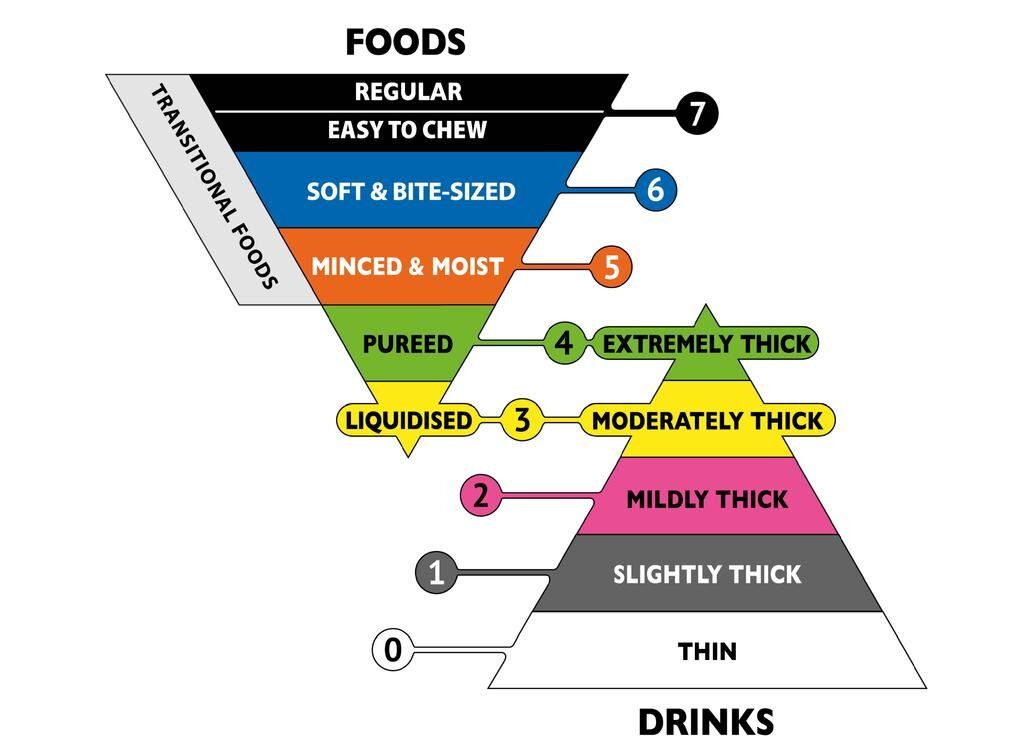
The International Dysphagia Diet Standardisation Initiative (IDDSI) Framework
Dysphagia Treatment
Speech Language Pathologists from Language Fundamentals are specially trained to provide swallowing therapy. Treatment of dysphagia may include:
-
restoration of normal swallow function (rehabilitative)
-
modifications to diet consistency and patient behavior (compensatory),
-
or some combination of these two approaches.
Compensatory techniques alter the swallow when used but do not create lasting functional change. Examples of a compensatory technique include head rotation and chin tuck. Although this technique may increase swallow safety during the swallow, there is no lasting benefit or improvement in physiology when the technique is not used. The purpose of the technique is to compensate for deficits that cannot be (or as of yet) are not yet rehabilitated.
Rehabilitative Techniques for Dysphagia
Rehabilitative techniques, such as exercises, are designed to create lasting change in an individual’s swallowing over time by improving underlying physiological function. The intent of many exercises is to improve function in the future rather than compensate for a deficit in the moment.
Upon completion of the clinical and/or instrumental evaluation such as a FEES test, the clinician should be able to use the acquired data to identify which treatment options would be most beneficial. Treatment options for patients with dysphagia should be selected based on evidence-based practice, which includes a combination of the best available evidence from published literature, the patient’s and family’s wishes, and the clinician’s experience. Options for dysphagia intervention include medical, surgical, and behavioral treatment. Of course, contact us and schedule an appointment.
ARE YOU READY TO GET STARTED?
CONTACT US TODAY TO SCHEDULE AN APPOINTMENT